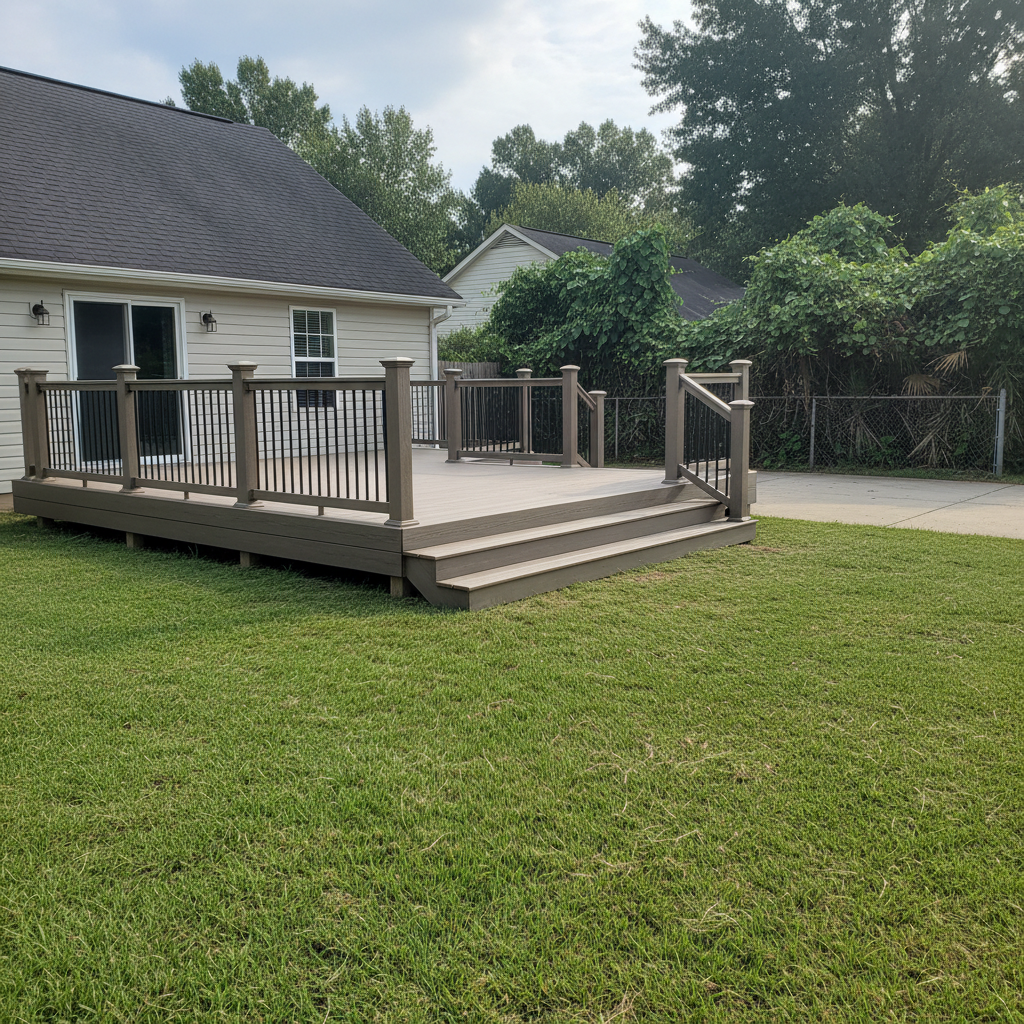
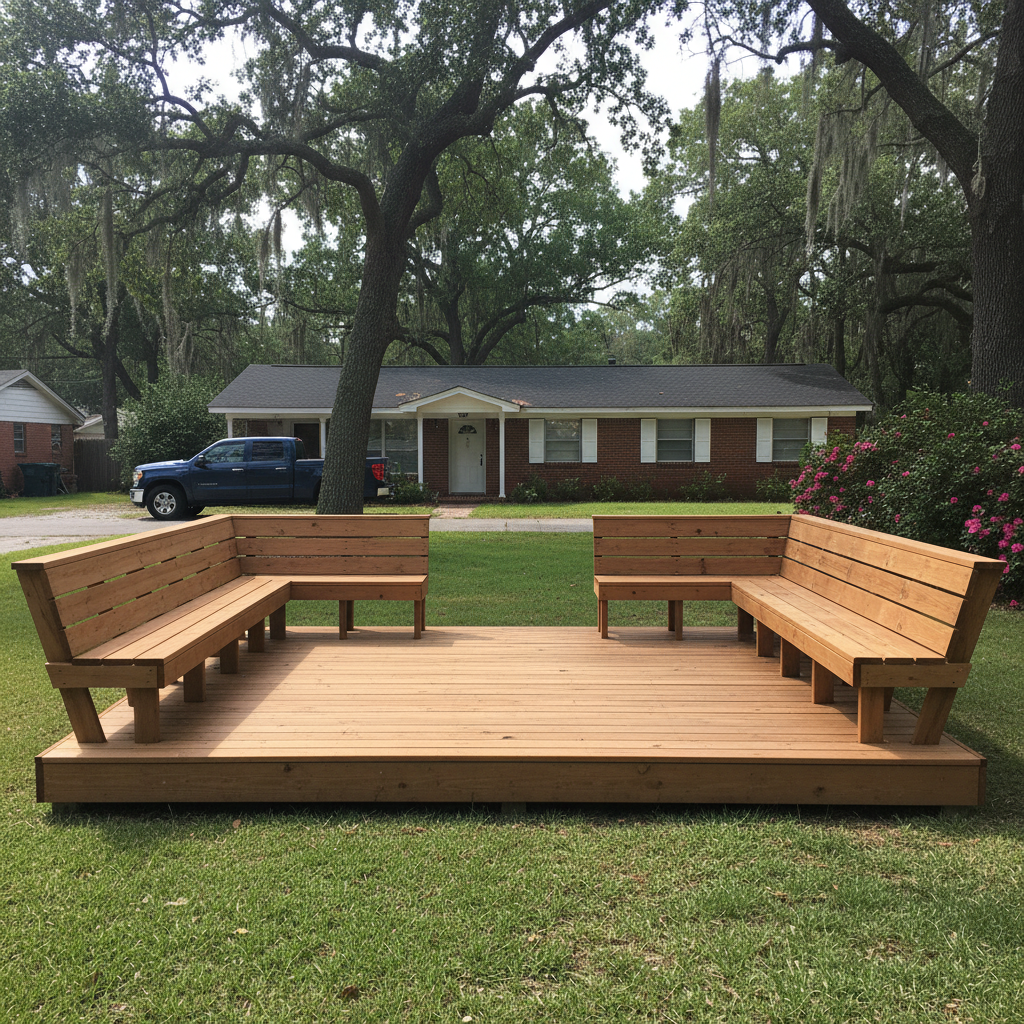
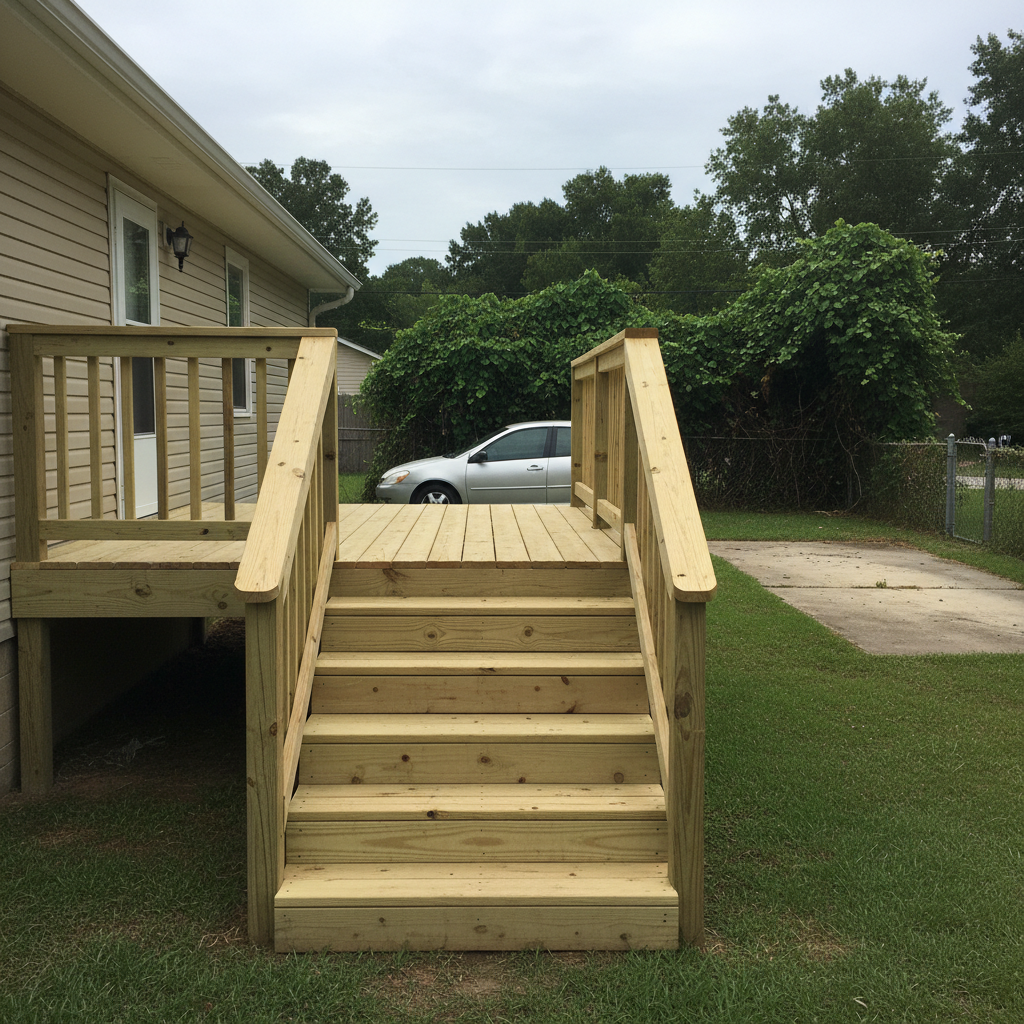
Every job below is one we do ourselves across Southaven.
We build decks from pressure-treated pine, cedar or composite, sized and framed for whatever you're putting on it, grill, hot tub, outdoor furniture. Footings go below frost depth and posts bolt to concrete, not just sit on top of it. Joist spacing changes depending on the decking you pick, often 16 inches on center for composite boards.
Soft spots, bouncing stairs, and railings that wiggle usually mean rot in the framing underneath, not just the boards you can see. We pull up decking to check joists and ledger boards before replacing anything, since a new surface over rotten wood just buys you another year or two. Small repairs we can usually knock out in a day.
Pressure-treated and cedar decks need a fresh coat every two to three years in this climate, sooner if the deck gets full sun all afternoon. We pressure wash first, let the wood dry out for a couple days, then apply stain or sealant depending on the look you want. Skip this step and the wood grays, splits, and starts soaking up water at the end grain.
Multi-level decks, built-in benches, pergola attachments, stairs that wrap around a corner instead of running straight down, we'll draw it before we build it. We size the layout around how you actually use the yard, not just what fits the lot. Anything structural gets run past the permit office before we start cutting lumber.
Composite boards cost more upfront than pressure-treated pine, but there's no restaining, no splinters, and the color holds for years. We install with hidden fastener systems on most composite lines, so you're not looking at screw heads across the whole deck. Ventilation underneath still matters, composite doesn't rot but it traps moisture against anything that does.
Wood, aluminum, cable, or composite rail, baluster spacing has to come in under 4 inches to meet code. We set posts through-bolted to the rim joist, not just screwed on, since that's the spot that fails first under lateral load. Cable rail looks clean but needs more substantial end posts to keep the tension right.
If you want a deck you can use without fighting mosquitoes half the year, a screened porch built over or next to the existing deck solves that. We frame it to carry a roof load, a different calculation than an open deck requires. Gutters and a roof tie-in usually come with this one.
If the framing underneath is still solid, we can pull the old decking and replace it without touching the structure. This is usually a fraction of the cost of a full rebuild. We check joist spacing while we're at it, older decks are sometimes framed wider than new composite boards allow.
A pergola or a solid roof over part of the deck changes how much you actually use it in July. We attach these to the house or set separate posts and footings, depending on what the span calls for. Either way it has to be engineered to handle wind, not just weight.
Sometimes a deck is past saving, rotted ledger, failed footings, framing that's been wet for years. We tear it out, haul off the lumber, and clear the area so you're starting from bare ground. This is often cheaper than trying to patch something that's structurally gone.
Four steps, and no surprises in any of them.
You tell us what you want doing, we look at what is actually there, and we ask the awkward questions early.
In writing, itemised, free. If something might add cost later we flag it now rather than at the end.
Same crew throughout. We cover your floors, keep the dust down and tidy up before we leave each day.
You point out anything you are not happy with and we fix it before the invoice, not after.
Deck installation and repair covers Southaven and the towns around it.
Questions that come up once a project actually gets going.
Describe the problem and we will tell you what it probably is. No obligation.